
MAIIA Website Sales Agent vs Phobs chatbot
Phobs makes it easier to send an offer.
MAIIA makes it easier to decide to book.
A guest who opens the hotel website has not necessarily already chosen that hotel. They may be comparing two or more options and looking for a reason to book direct, instead of through Booking.com. Before an offer arrives by email, they need help choosing the right package, seeing what else the hotel offers, and wanting to book there.
Automates the price and availability check, and prepares a standard offer for the hotel.
Understands what the guest needs, recommends the relevant offer and add-on services, then leads toward a booking or a qualified enquiry for the hotel.
What the hotel is actually buying
Less manual work. And more chances to sell.
Automated offer-sending solves a real problem for reception and sales. The hotel has another, more important job as well: help the guest choose this offer — and recognise the value of wellness, the restaurant, packages, and the rest of what the property sells.
The Phobs chatbot is useful when the guest already knows the dates and wants a price. MAIIA Website Sales Agent is also built for the guest who is still thinking: “We’re coming with the children. What would you recommend? Can we get a little rest ourselves?”
The key question: Did the conversation help the guest make a better decision — or did it only collect details they could have typed into the booking engine themselves?
The core difference
A booking engine is not a sales knowledge base.
A booking engine is the last step of the purchase: the guest checks price and availability and completes the reservation. A sales knowledge base helps them decide, before that, why they want this hotel and what they want from the stay.
On the Phobs architecture described for this comparison, the booking engine is the only source of structured data and photographs shown in the bot, and it covers rooms and offers. The rest of the property is not included in that source as a complete sales catalogue.
Verdict
A booking engine should not be the only data source for a sales agent. A price and a free room are not enough for a guest to understand the value of wellness, the restaurant, treatments, activities, and special experiences.
MAIIA builds sales knowledge about the whole hotel from several sources. It helps the guest explore, compare, and choose what is relevant, then sends them to the booking engine or sends the hotel a qualified enquiry.
Side by side
The same end goal. A different job before the booking.
Category winner is marked with .
| Sales task | Phobs chatbot · tested flow | MAIIA Website Sales Agent |
|---|---|---|
| The guest does not have dates yet | The conversation returns to dates several times, and to a check of available rates. | Helps the guest understand the offer and choose the kind of stay first, then points them to a date check when they are ready. |
| Choosing the right offer | Presents accommodation units and prices well. Finding the relevant wellness package in the test required the guest to persist. | Connects what the guest needs with rooms, packages, and the rest of the hotel. |
| Add-on sales | Suggestions for extra services appear late, after many follow-up questions. | Selling wellness, the restaurant, tours, and other services is part of the sales strategy and of the conversation about the stay. |
| A visual offer | Room and offer photos come from the booking engine. Photos of wellness, the restaurant, and other parts of the property outside that source are not available to show. | Cards for rooms, wellness, activities, and other content, with the right links. |
| The guest is ready to book | The choice becomes a standard offer with a path to continue the booking. The link can also be sent in the chat. | The guest is sent to the booking engine through the right link, where they check price and availability and finish entering their details. |
| The guest does not want to fill in a form | The bot collects the details and automates sending the offer. | Collects what is needed and sends the hotel a qualified enquiry with context and a summary of the whole conversation, plus stated interests and likely upsell opportunities, so staff can prepare a better offer and continue the sale. |
| Phobs’s role | The booking engine and its conversational channel. | The hotel keeps Phobs. MAIIA leads the guest to the existing booking engine. |
| An offer outside the booking engine | The booking flow relies on products and conditions available in the system. Other requests need extra handling. | Also presents content that is not in the booking engine. The guest can send a request to book or order a service, and the right staff confirm whether it is possible and on what terms. |
| Groups, gifts, and special requests | A standard room search does not necessarily cover a group arrangement, a surprise, or a combination of several services. | Collects a group enquiry, a request for another person, a gift, or a surprise — with the details the hotel needs to pass on. |
| Preparing hotel knowledge | On the information used for this comparison, knowledge outside the booking engine is entered by the hotel as Q&A pairs. | Automatically collects and structures knowledge from the hotel website, documents, and other sources. The hotel reviews the content and fills the gaps that were found. |
The automated offer
The email delivers the chosen offer. It does not choose for the guest.
The email that arrived contained the chosen accommodation unit, a description, the package, the dates, the guests, the price, and a button to continue the booking. Its value for the hotel is that preparing and sending the offer is automated. The guest can save the offer and come back to it later.
From the point of view of choice, it delivers an offer the guest could also have reached on their own through the booking engine. The email is not a new sales recommendation. In this example it sends one option that was already chosen, without a comparison to the wellness package the guest only manages to clarify later.
If the guest already knows what they want and is ready to book, an extra conversation, an email address, and opening an offer can make the path longer. MAIIA then sends them to the existing booking engine. If they want help from staff, MAIIA collects the details and sends them to the hotel.
Automation is useful when it shortens the work. A sales conversation adds value when it shows the guest a better option, makes the difference clear, and makes the next step easier.
Two paths to a booking
The guest chooses how much help they need.
“I know what I want. I’ll book it myself.”
- MAIIA helps the guest choose a room or a package.
- It recommends relevant add-on services and explains their value.
- The guest opens the right link into the Phobs booking engine.
- They check the final price and availability, enter their details, and complete the booking.
“Send me an offer. I don’t want to fill this in now.”
- MAIIA clarifies what the guest wants, including special requests and add-on services.
- It collects the details and contact information the hotel needs.
- The hotel receives a qualified enquiry with context, a summary of the whole conversation, stated interests, and likely upsell opportunities.
- Staff can prepare a better offer and continue the sale with the guest’s needs already known.
For the Phobs connection, MAIIA currently uses deep links. Final prices and availability are confirmed by the booking engine. This is not a claim of direct Phobs API access inside the MAIIA chat. Handing an enquiry to the hotel is not an automatically confirmed reservation.
What the test showed
A family with children can still want wellness.
“Two adults and two children” describes who is travelling. It does not say what they want from the holiday.
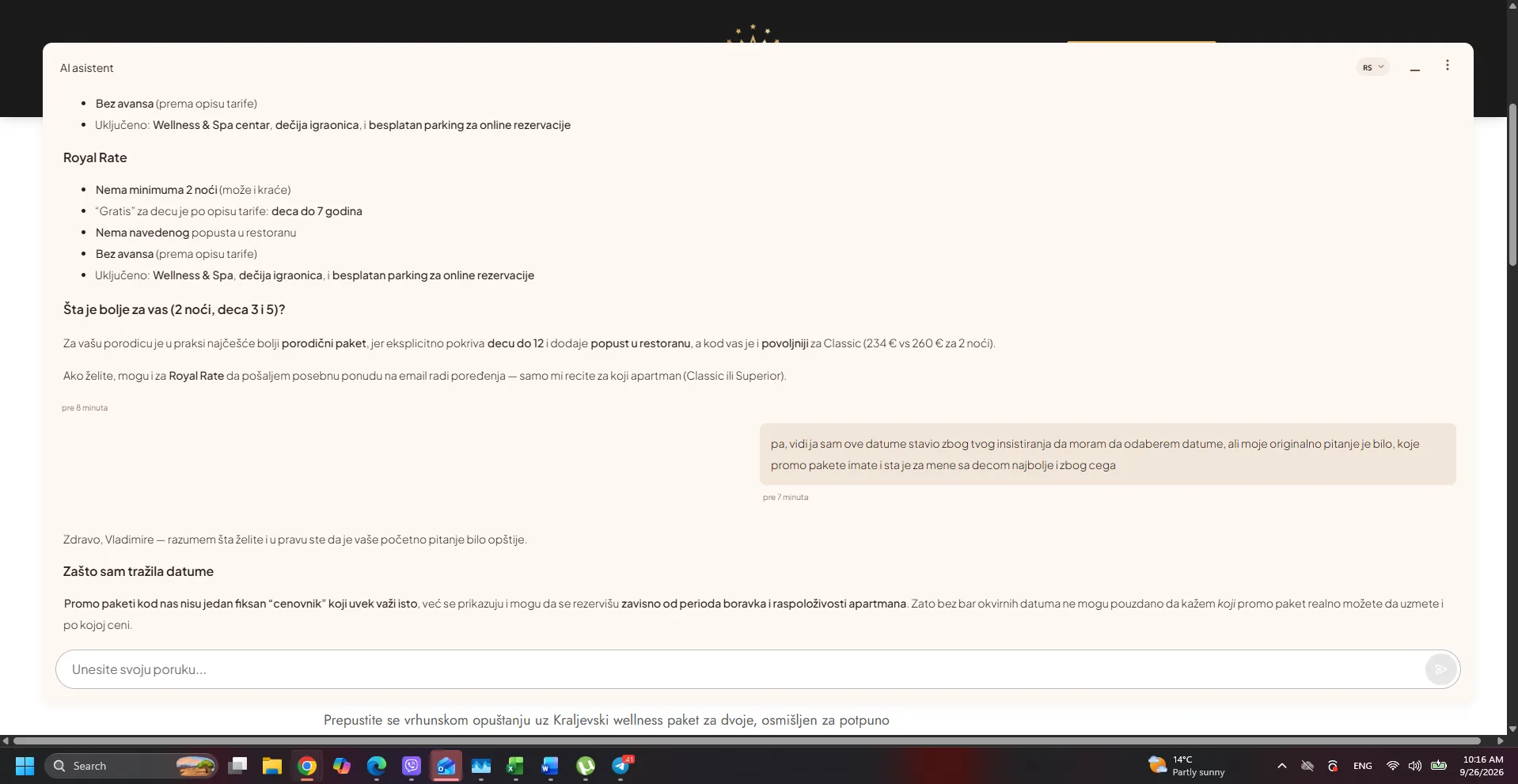
In the tested conversation, the bot steered the family toward a family rate. The guest had to bring the wellness package into the conversation themselves, and show that it exists on the website and in the booking engine. The bot first ruled it out for October, then found it for the same dates when checking two adults only.
The sales conclusion: an availability search cannot replace an understanding of why the guest is coming. A relevant package must not disappear from the conversation only because the first search did not return it. The conditions need to be checked, or the specific request passed to staff.
A massage and time to themselves may matter more to the parents than the lowest price. A good recommendation finds that early, and checks the conditions for the playroom and for supervising the children.
Evidence · Phobs
The guest has to guess dates in order to discover the offer.
The order of choice is reversed. The guest is asked to pick a date before they understand which offer they would come for.
The conversation keeps returning to dates. The guest asks which packages the hotel offers and what would suit their family, and the bot asks for dates so it can show what is available. The guest then has to guess what is on offer on which date — even though that is exactly what they are trying to learn from the bot.
If the guest is flexible, an attractive package can be the reason they choose a particular set of dates. A sales agent should present the relevant packages, what they include, and the periods they are known to apply, and then help the guest check availability. Exact dates are needed for the final price and the booking. They should not be a barrier to the guest learning what the hotel offers at all.
Evidence · MAIIA
The recommendation grows from a room into the whole stay.
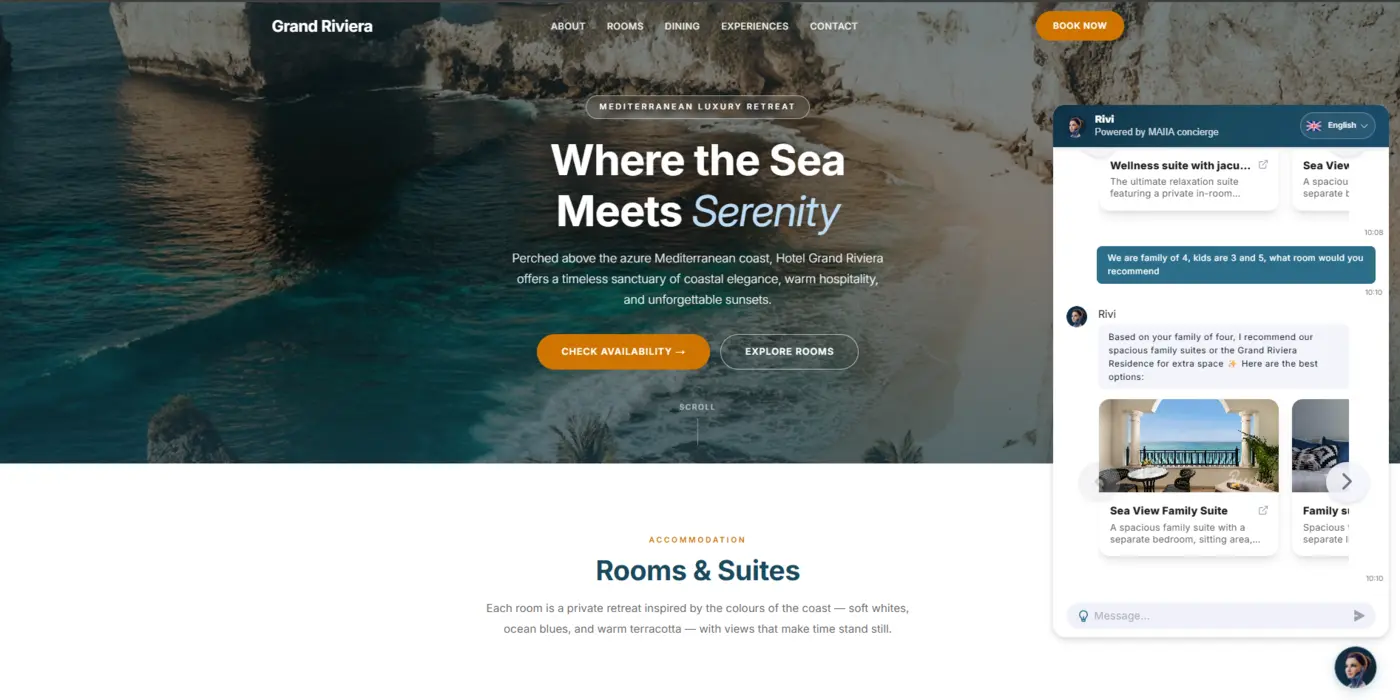
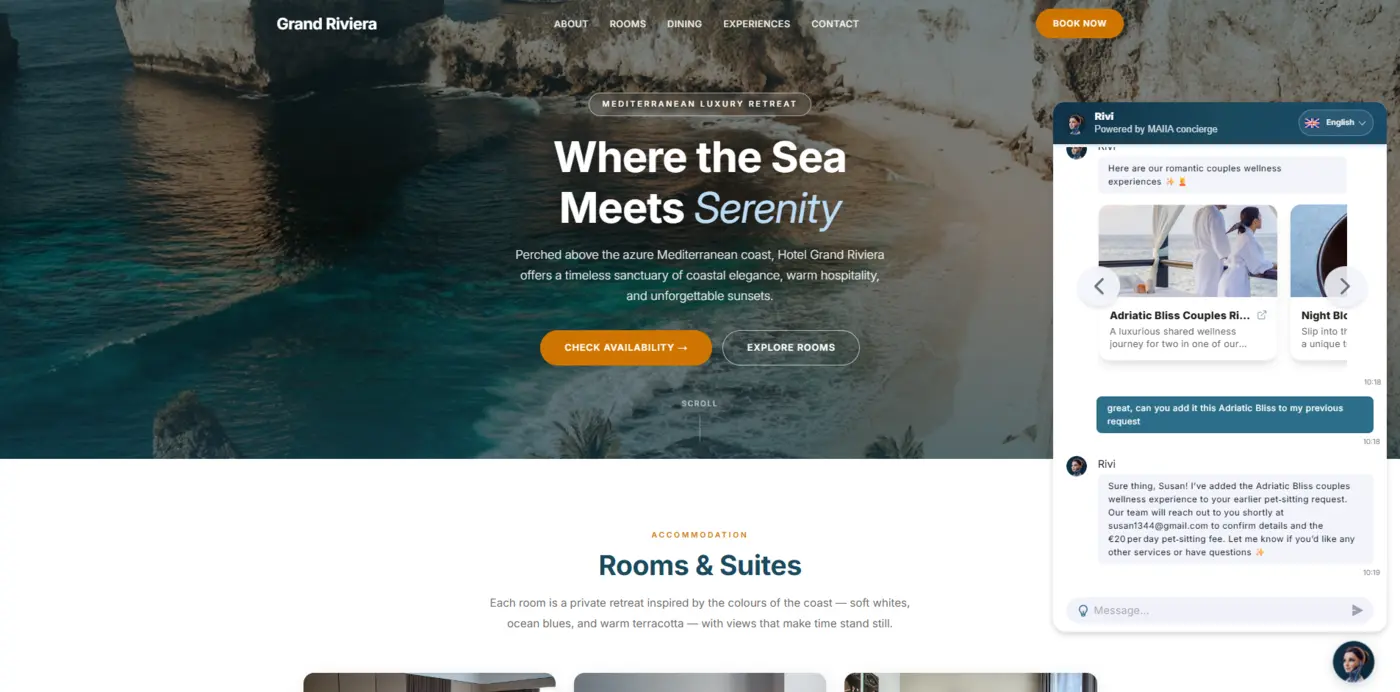
A conversation can start with choosing a room and grow into interest in wellness, a tour, a transfer, or a special service. The hotel receives a clearer request and more chances to earn from the stay.
The MAIIA images are from an earlier Grand Riviera example. They illustrate the MAIIA flow. They are not a controlled test of the same hotel and the same inventory.
The value of the offer
The cheapest option is not always the best choice for the guest.
For the same October dates, two different values of the stay appear. The wellness option includes extra content that may match what the parents actually want. That difference is worth presenting and explaining before a single offer is sent.
The sales job is not to push the more expensive option. It is to show what the guest gets and leave them an informed choice. That is how a meaningful upsell happens.
The family offer of €234 covers 2 adults and 2 children. The wellness price of €344 is marked for 2 people. The final conditions for children were not confirmed. The difference illustrates the range of the offer. It is not proof of lost revenue, or of two final bookings that can be compared directly.
More than the room
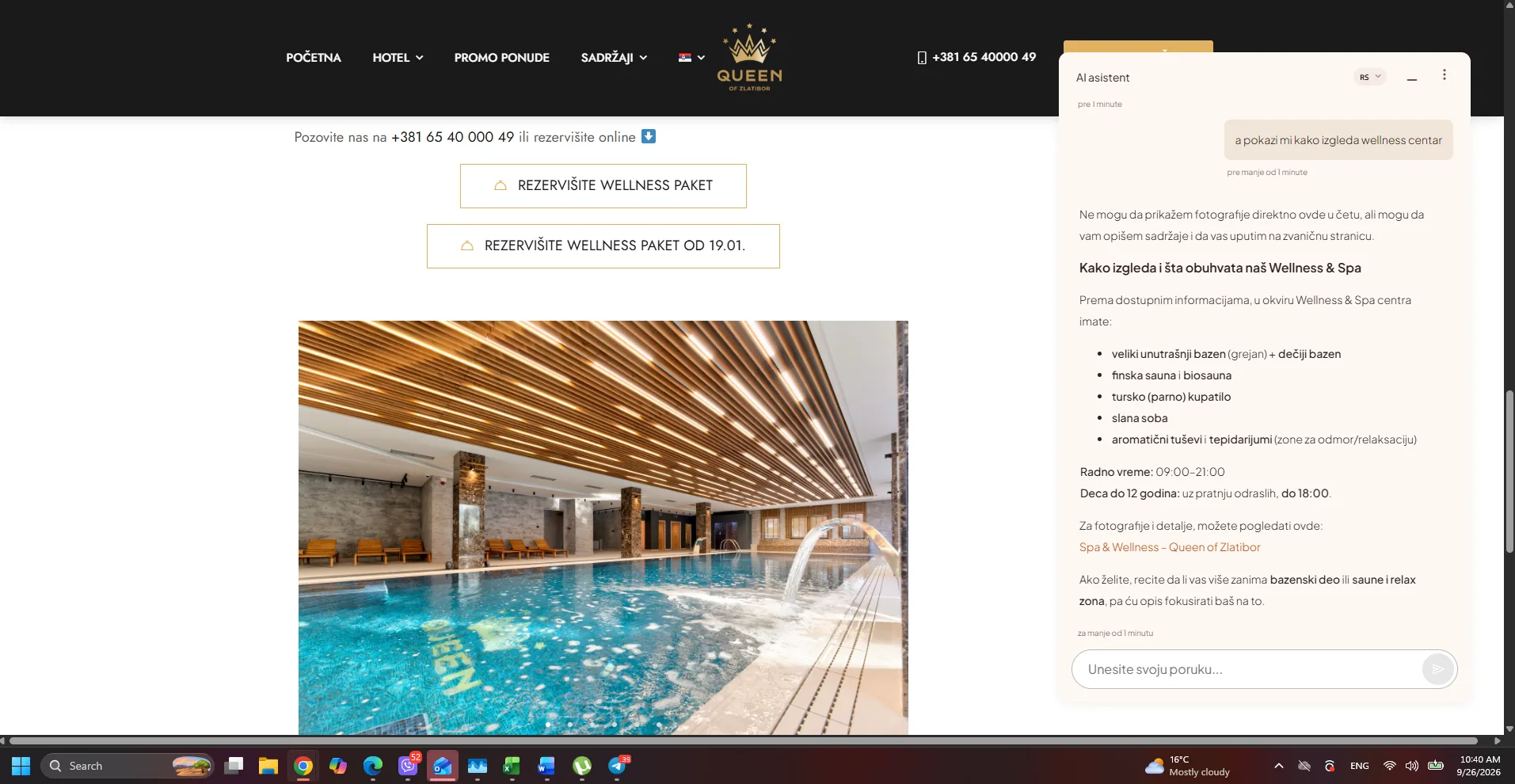
If the hotel sells wellness, the guest should be able to see it.
This is a limit of the data source, not only a missed photograph in one answer.
For a hotel with a spa, restaurants, and activities, the room is only part of the offer. When the visual display relies only on rooms and offers from the booking engine, photographs of the rest of the property stay outside the conversation — even when they exist on the hotel website.
Text entered through Q&A can complete an answer. It does not provide a visual catalogue of wellness, restaurants, spaces, and other content.
MAIIA builds knowledge of the whole hotel from several sources and uses cards with photographs and relevant links. The guest can see what they would use, understand the differences, and show interest in content that is not a line item in the booking engine.
In the Phobs conversation, extra treatments, the restaurant, and room service do appear. The difference is in the flow: they arrive late, after the guest has been steered there. MAIIA’s sales strategy is built to develop those opportunities while the guest is choosing the stay.
Sell the whole stay
A guest can choose much more than what fits in a booking form.
A room and a rate are not the whole hotel offer. The guest wants to see where they will eat, what the wellness looks like, which treatments they can use, what the children will do, and which activities they can plan.
MAIIA Website Sales Agent connects that content into a conversation about a specific stay. The guest can look through relevant rooms, restaurants, treatments, tours, and activities on cards and links, then choose what they want to use or book.
The service is not in the booking engine?
It can still be part of the sale. The guest can ask for a treatment, dinner, a transfer, a tour, or a special arrangement. MAIIA collects the details and sends the request to the right staff member, or leads to the right page to book.
The request does not fit the standard fields?
The guest describes it in their own words. MAIIA clarifies the need and turns it into a qualified enquiry the hotel can handle, instead of ending the conversation at the limits of a form.
| What the guest wants | What MAIIA collects | What the hotel receives |
|---|---|---|
| “We’re coming as a group.” | Number of people, how the rooms should be split, the period, meals, shared activities, and special needs. | A group enquiry with enough context to prepare a suitable offer. |
| “I’m booking for my parents.” | Who the stay is for, what those guests need, the services they want, and the booker’s contact. | A clear split between the guest and the person organising the stay. |
| “I want a surprise for my partner.” | The occasion, the budget, wishes such as dinner, a treatment, or decoration, and how to communicate discreetly. | A concrete request to check what is possible and prepare a personalised offer. |
| “I want a room, a massage, and dinner.” | The chosen accommodation, interest in a treatment and the restaurant, preferred times, and special requests. | Connected interest in several services, instead of an isolated room-price enquiry. |
For services and special arrangements that staff handle, MAIIA collects and forwards the request. The hotel confirms availability, price, and the booking. Gift or surprise suggestions depend on what the hotel actually offers and can do.
Verdict
What does not exist as a line item in the booking engine does not have to stay unsold. The conversation lets the guest ask, and lets the hotel offer and arrange it.
Automatic knowledge preparation
The hotel does not have to write every question and answer itself.
Selling the whole hotel requires knowledge of the whole hotel. MAIIA automatically collects and structures content from the hotel website, PDF documents, and other sources, including Booking.com and reviews.
On that base it prepares knowledge of rooms, packages, facilities, and services, and sales strategies suited to the type of property. The hotel reviews what was prepared, approves the information, and fills gaps found before go-live.
That reduces the preparation work. Staff do not start from an empty list of Q&A pairs, and they do not have to predict every way a guest might phrase a question. A typical MAIIA setup is 3–7 days, with the available sources and the hotel’s cooperation.
The description of Phobs data sources, the limits of what can be shown visually, and the Q&A way of entering knowledge comes from information supplied for this comparison. The architecture and the admin panel were not independently verified in this test.
The booking engine stays
You do not have to replace Phobs or any other booking engine to improve sales.
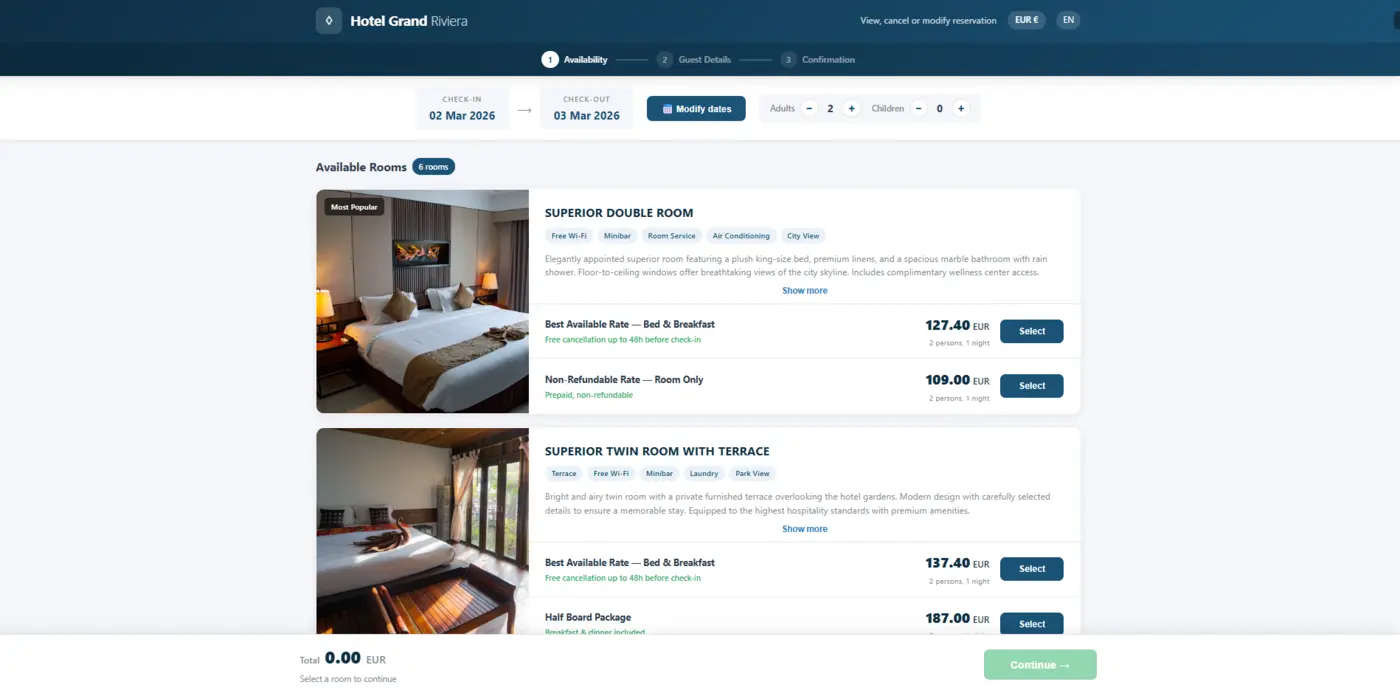
Phobs keeps doing the job of the booking engine. MAIIA works with the guest before that step: it explains the hotel offer, recommends relevant options, and collects interest in add-on services.
Verdict
Keep your booking engine. Add a sales agent that helps the guest choose the right stay — and discover more of what your hotel offers.
Basis of the comparison
A concrete test, a clear scope.
The Phobs side is based on a conversation supplied from the Queen of Zlatibor website on 26 September 2026, screenshots of the website and the booking engine, and a PDF of the offer that was received. The property tested is an apart-hotel, but the subject of the comparison is the sales flow for accommodation in general — rooms, apartments, and other units. Specific findings about the bot’s behaviour apply to the implementation that was tested.
The MAIIA side is based on the product as described and on earlier MAIIA examples. Conversion rates, booking-completion speed, and revenue lift were not measured. A message count stated by the bot itself was not used as an independently confirmed metric.
Try the same guest scenario on MAIIA
Run your evaluation question on our Website Sales Agent — then compare answer depth, booking path, and setup effort side by side.